Progression is the prettiest way to avoid fixing a bad restart. XP bars, unlock trees, coins, daily rewards, and tiny achievement pings can make a prototype look busier. They cannot make the second attempt feel good.
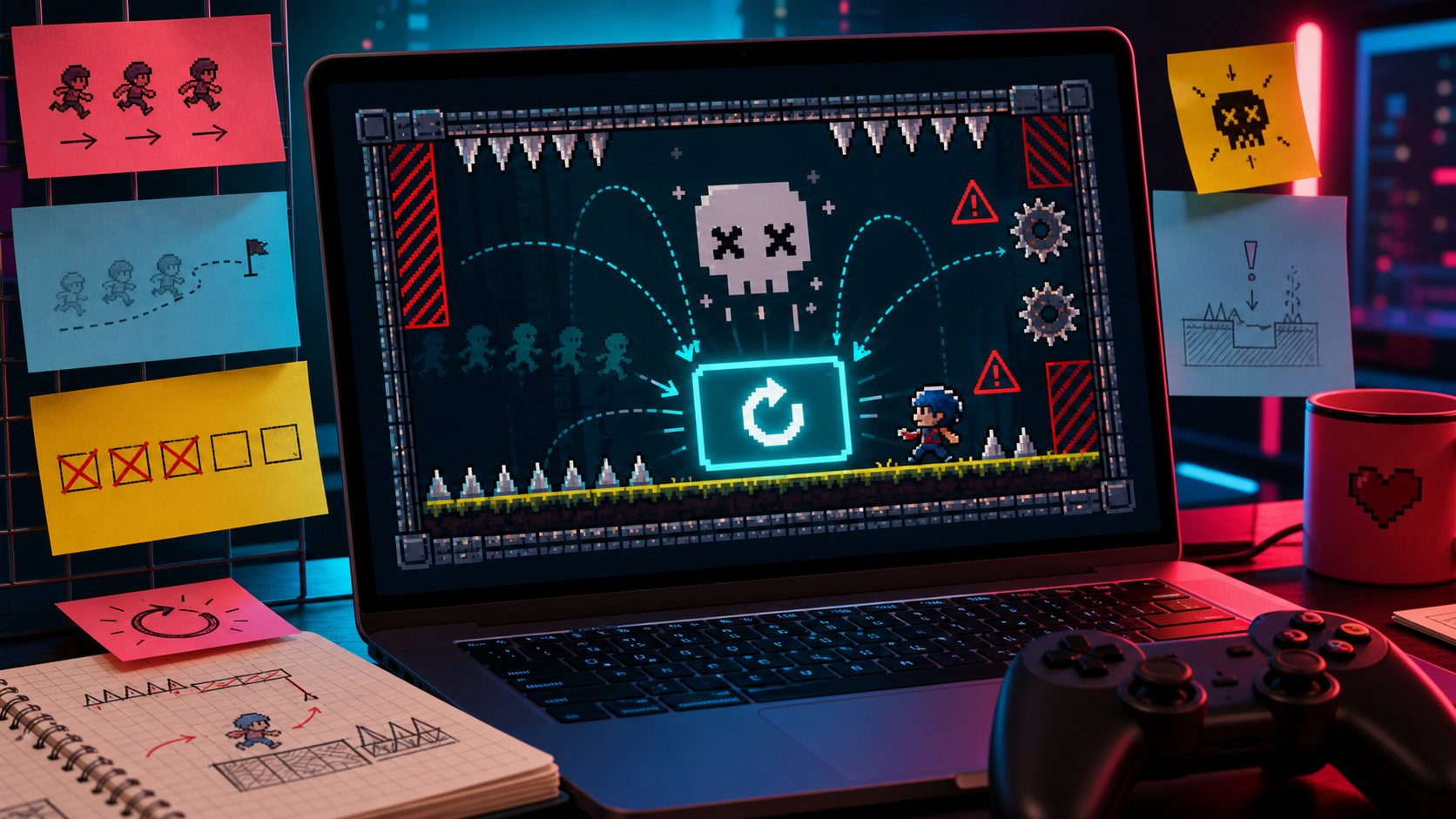
Before you ask your AI builder for upgrades, ask for a cleaner death. Ask for a faster reset. Ask for a first playable where losing teaches the player one thing and drops them back into trouble before they can reach for their phone.
This is a workflow piece for creators making browser-playable AI game prototypes and small-engine drafts. It focuses on restart feel as an early design test, not on long-term retention systems.
Godot
An open-source engine that gives you direct control over reset timing, checkpoints, input buffering, and failure states.
GDevelop
A no-code and low-code game builder that makes quick event-based retry loops easy to inspect and tune.
Construct
A visual game builder that works well for testing short arcade loops, instant restarts, and score pressure.
PICO-8
A fantasy console with harsh limits that make sloppy reset pacing painfully obvious.
The Second Attempt Is the Test
The first attempt has novelty on its side. The player is learning the controls, reading the screen, and forgiving a lot. The second attempt has no such mercy. If the restart is slow, if the fail state is muddy, or if the player has to wait through the same tiny ceremony again, the prototype is already bleeding trust.
This is why progression is dangerous early. It pays the player for continuing before you know whether continuing feels good. A restart loop asks a colder question: did that failure make you smarter enough to try again right now?
A good restart does not comfort the player. It dares them to prove they learned something.
Bad Reset vs Good Reset
| Prototype moment | Weak version | Better version |
|---|---|---|
| Death | The screen stops and the player waits | The cause is obvious before control returns |
| Retry | A menu interrupts the rhythm | One input restarts the attempt |
| Spawn point | The player repeats empty walking | The player returns one decision before danger |
| Feedback | Failure feels random | Failure names the mistake through motion, sound, or layout |
Prompt for the Loop, Not the Reward
If you are vibe coding the prototype, make the restart part of the prompt. Do not just ask for a platformer with coins and upgrades. Ask for a platformer where touching spikes instantly restarts the room, the player respawns facing the hazard, and the obstacle is placed so the second try starts with a better plan.
That kind of prompt gives the generated game a rhythm to protect. You can still add coins later. Right now, you need to know whether the fail, learn, retry cycle has teeth.
Time to trouble
After failure, the player should reach the meaningful decision almost immediately.
If the restart includes ten seconds of travel, you are testing patience instead of play.
Readable blame
The player should know whether they jumped late, aimed badly, got greedy, or ignored a warning.
If the player blames the game, the next attempt starts angry.
Changed behavior
The next run should invite a slightly different move, route, or timing choice.
If the second attempt is identical autopilot, progression will only decorate boredom.
- Failure is visible, not mysterious.
- Restart takes one deliberate input or less.
- The player returns near the real decision.
- The second attempt can be smarter than the first.
- No reward system is needed to make one more try tempting.
Keep tuning restart feel
Players quit after one or two failures, or they cannot explain what killed them.
Fixing trust before adding rewards.Add short-run scoring
The restart already feels quick and players want to compare attempts.
Giving the loop a target without building a full economy.Add upgrades later
Players replay the prototype because the next attempt feels winnable.
Extending a proven loop instead of bribing a weak one.FAQ
Should a first playable have progression?
Only if the restart loop already works. Early progression can hide weak failure feedback and slow retry pacing.
How fast should a game prototype restart?
Fast enough that the player keeps their plan in their head. For tiny arcade and platformer tests, that usually means instant or near-instant retry.
What should I prompt for when testing restart feel?
Prompt for the fail state, the respawn point, the retry input, and the lesson the player should understand after losing.